Afrikaans
 Albanian
 Amharic
 Armenian
 Azerbaijani
 Greek
Greek Basque
 Chinese (Simplified)
 Chinese (Traditional)
 Belarusian
 Bengali
 Bosnian
 Bulgarian
 Catalan
 Cebuano
 Chichewa
 Corsican
 Croatian
 Czech
Czech Danish
 Dutch
Dutch Esperanto
 Estonian
 Filipino
 Finnish
 Frisian
 Galician
 Georgian
 Gujarati
 Haitian Creole
 Hausa
Hausa Hawaiian
 Hebrew
 Hmong
Hmong Hungarian
 Icelandic
 Igbo
Igbo Indonesian
 Irish
Irish Javanese
 Kannada
 Kazakh
 Khmer
Khmer Kurdish (Kurmanji)
 Kyrgyz
 Lao
Lao Latin
Latin Latvian
 Lithuanian
 Luxembourgish
 Macedonian
 Malagasy
 Malay
Malay Malayalam
 Maltese
 Maori
Maori Marathi
 Mongolian
 Myanmar (Burmese)
 Nepali
 Norwegian
 Pashto
 Persian
 Punjabi
 Samoan
 Scottish Gaelic
 Serbian
 Sesotho
 Shona
Shona Sindhi
 Sinhala
 Slovak
 Slovenian
 Somali
 Sudanese
 Swahili
 Swedish
 Tajik
Tajik Tamil
Tamil Telugu
 Turkish
 Ukrainian
 Urdu
Urdu Uzbek
Uzbek Vietnamese
 Welsh
Welsh Xhosa
Xhosa Yiddish
 Yoruba
 Zulu
Zulu
6 Benefits of Vine Training for Greenhouse Fruits and Vegetables – A Must-Read for Growers
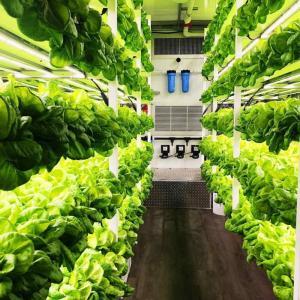
Vine training is a simple yet insightful key management technique for growing fruits and vegetables in greenhouse settings. By manually guiding plants to grow vertically, this practice optimizes space utilization, environmental control, yield, and quality comprehensively.
-
Maximize Space Efficiency for Denser PlantingVertical space in greenhouses is often underutilized. Vining crops like cucumbers and tomatoes, if left to sprawl on the ground, will have tangled vines that occupy large ground areas and limit planting density. The core benefit of vine training is to make plants "grow upright": stems are pulled upward with hanging ropes, allowing branches and leaves to spread vertically. This frees up crowded ground space, enabling narrower row and plant spacing, and more seedlings can be planted per unit area. For example, tomato planting density can be appropriately increased with vine training compared to ground-crawling methods, significantly boosting land utilization rate.
-
Ensure Sufficient Sunlight for Higher Photosynthetic EfficiencyAdequate photosynthesis is essential for healthy crop growth, and sunlight is the core driver of this nutrient-producing process. Ground-crawling plants form a tangled mass, with leaves overlapping in layers. Lower and middle leaves get little to no sunlight, eventually turning yellow and withering, becoming a burden that consumes nutrients without contributing. Vine training changes this: branches and leaves are arranged in an orderly manner, ensuring uniform light exposure from top to middle. Sufficient sunlight enhances photosynthetic efficiency, leading to richer accumulation of sugars and vitamins in fruits.
-
Promote Air Circulation to Reduce Diseases and PestsGreenhouses are highly enclosed. Poor ventilation easily leads to high humidity – a perfect breeding ground for diseases like downy mildew and gray mold, and pests also favor hot and humid environments. Vine training "loosens up" plants: with no more clustered branches and leaves, gaps form between plants, enabling smooth air circulation. Moisture dissipates with airflow, and dew on leaves dries quickly, eliminating the conditions for pathogen growth. For instance, vine training effectively reduces field humidity for cucumbers, lowering the incidence of downy mildew and cutting down pesticide application frequency.
-
Simplify Management and Harvesting to Boost Work EfficiencyAnyone who has grown crops knows the hassle of managing ground-crawling plants: pruning and pinching require pushing through layers of foliage; spraying pesticides may leave some areas untreated; harvesting means squatting and rummaging around. With vine training, plants grow neatly upright with clearly distributed branches and leaves. Pruning, flower thinning, and pesticide spraying become easier as hands can reach all parts of the plant effortlessly. Fruits hang on the middle and upper parts of the plant, with their color and size clearly visible. Harvesting only requires a simple reach, no more bending and stooping, significantly improving picking efficiency.
-
Facilitate Nutrient Transport to Improve Fruit Quality and AppearanceWhen plants grow crooked, nutrient transport takes a "detour". The curved stems of ground-crawling plants make it difficult for water and nutrients absorbed by the roots to reach the fruits. Vine training keeps stems straight, ensuring "unobstructed" nutrient transport, so water and fertilizers are delivered to the fruits smoothly. Additionally, fruits grow suspended in the air, avoiding scratches from soil and deformities caused by extrusion. You’ll find vine-trained cucumbers are straight and uniform, while vine-trained tomatoes have even coloration, better market appearance, and firmer texture.
-
Regulate Plant Growth to Avoid Over-Vegetative GrowthSometimes plants grow "unruly" – either putting all energy into foliage growth instead of fruiting (over-vegetative growth) or staying too short with low yields. Vine training allows growers to "control" plants by adjusting the tightness of hanging ropes. Essentially, vine training scientifically regulates the plant’s growth environment and state, ensuring every inch of space and every bit of nutrient is used effectively. For greenhouse cultivation, mastering this technique lays a crucial foundation for high yield and premium quality.