Precision Nutrition Regulation in Vegetable Seedling Production: Cultivate Strong Seedlings for High Yield
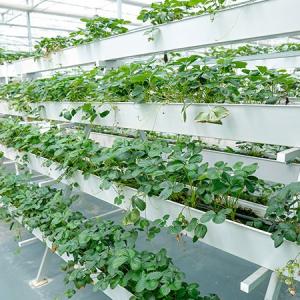
At the "starting stage" of agricultural production, the quality of vegetable seedlings directly determines subsequent yield and product quality. Traditional seedling cultivation often faces issues like excessive growth and weak seedlings due to "one-size-fits-all" nutrient supply. In contrast, precision nutrition regulation technology acts as a "customized nutritious meal" for seedlings. By scientifically formulating nutrient ratios and dynamically adjusting supply strategies, it ensures each seedling receives the most suitable growth energy.
1. Precise Ratio of Nutrient Elements
Vegetable seedlings have significant differences in demand for nitrogen (N), phosphorus (P), potassium (K), calcium (Ca), magnesium (Mg) and other elements. For example, solanaceous vegetables require high nitrogen during the seedling stage to promote leaf growth, but excessive nitrogen inhibits root development. Leafy vegetables, on the other hand, need more than 1.5 times as much potassium as nitrogen—potassium deficiency causes leaf edge withering. Precision regulation requires controlling the NPK ratio within a reasonable range based on crop type, while supplementing trace elements such as calcium, magnesium and boron to avoid growth limitations caused by the "barrel effect".
2. Dynamic Adjustment by Growth Stages
The growth of vegetable seedlings (from sowing to transplanting) generally goes through four stages: germination stage, cotyledon stage, true leaf growth stage, and hardening-off stage.
-
Germination StageFrom seed water absorption and germination, to radicle emergence (white tip), and until seedling emergence (cotyledon expansion). Seeds rely on stored nutrients for growth, making this the most vulnerable stage.Key requirements: Sufficient moisture for seed imbibition and germination; appropriate temperature (varies by vegetable type—thermophilic or cold-tolerant); adequate oxygen (loose, well-drained soil to prevent waterlogging and seed rot).Management points: Keep the medium moist but not waterlogged, and maintain stable, suitable temperature.
-
Cotyledon Stage (Early Seedling Stage)From full expansion and greening of cotyledons to the appearance of the first true leaf (hearting). Cotyledons serve as the main photosynthetic organs and nutrient sources, while roots (mainly taproots) begin to grow with weak absorption capacity.Key requirements: Sufficient light to prevent excessive elongation of the hypocotyl (etiolation) and promote cotyledon hypertrophy; appropriately lower temperature (especially night temperature) compared to the germination stage to avoid etiolation and promote root development; moderate moisture (keep soil moist, avoid alternating dryness and wetness).Management points: Timely remove mulch to increase light; properly ventilate to reduce temperature and humidity; prevent "leggy seedlings".
-
True Leaf Growth Stage (Basic Nutrient Growth Stage/Seedling Maturation Stage)From the emergence of the first true leaf to reaching the suitable seedling age and morphology for transplanting (e.g., 4-5 true leaves). This is the longest stage in seedling cultivation.Key characteristics: True leaves gradually grow and expand, replacing cotyledons as the main photosynthetic organs; roots (lateral and fibrous roots) grow rapidly with significantly enhanced absorption capacity; stems (epicotyls) elongate noticeably; leaf number, area and dry weight increase rapidly; flower bud differentiation begins (critical for fruiting vegetables).Key requirements: Sufficient light (foundation for photosynthesis, robust growth and flower bud differentiation); appropriate temperature (day-night temperature difference—slightly higher daytime temperature than cotyledon stage to promote growth, lower night temperature for nutrient accumulation and strong seedling development); reasonable moisture management ("water when dry" to promote root penetration, prevent etiolation and diseases); necessary nutrient supply (topdress timely and moderately with NPK-based fertilizers according to seedling growth and medium fertility); good ventilation (reduce humidity, increase CO₂, strengthen seedlings, and prevent diseases).Management points: Enhance light, regulate temperature and humidity, manage water and fertilizer, prevent and control pests and diseases; thin seedlings and transplant timely to ensure sufficient growth space.
-
Hardening-off Stage (Pre-transplant Acclimation Stage)Starts 5-10 days before scheduled transplanting and ends before transplanting. The goal is to acclimate seedlings to the field environment after transplanting (especially open-field planting), improve stress resistance (cold, drought, wind, disease), and shorten the seedling recovery period.Main measures: Gradually lower temperature (especially night temperature) to approach or slightly below the transplanting environment; control moisture (reduce watering frequency and volume, "restrict growth" without permanent wilting to inhibit above-ground overgrowth, promote root development, and firm plant tissues); strengthen ventilation (gradually increase ventilation volume and duration until mulch is fully removed without frost risk); reduce or stop topdressing (especially nitrogen fertilizer).Management points: Proceed gradually to avoid "stunted seedlings" or damage from excessive acclimation; closely monitor seedling status during hardening-off.
3. Intelligent Response to Environmental Conditions
Environmental factors such as temperature, light and humidity directly affect nutrient absorption efficiency. For example, low temperatures reduce root activity—supplement phosphorus and potassium via foliar spraying; high temperature and humidity require reduced nitrogen use to avoid etiolation. Precision regulation involves real-time adjustment of fertilization strategies based on environmental monitoring data.
4. Benefits of Precision Nutrition Regulation
- Enhance seedling stress resistance: Cultivate strong seedlings, reduce risks of cold damage, heat scorch, pests and diseases.
- Promote root development: Precise nutrient supply improves absorption efficiency, reduces fertilizer use, optimizes root structure, and accelerates root ball formation.
- Boost flower bud differentiation: Supplement zinc and boron during tomato seedling stage to increase fruit set rate of the first cluster.
- Shorten seedling cycle: Solanaceous vegetables under precision regulation can be marketed earlier to seize market opportunities.
Precision nutrition regulation is not only a technological upgrade but also an innovation in agricultural concepts—it transforms vegetable seedling cultivation from "experience-based planting" to "data-driven planting", and from "extensive management" to "intensive management". In the future, with the in-depth application of the Internet of Things and artificial intelligence, each seedling will have its own "nutritional health record".
Related News