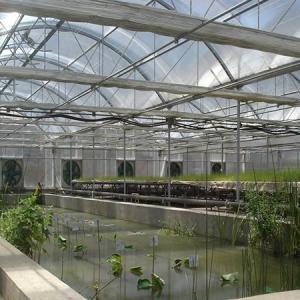
Hoop House (Cold Frame / Spring & Autumn Greenhouse): An Essential Guide
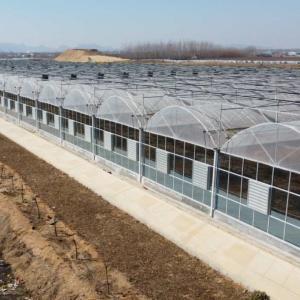
In modern agricultural production, hoop houses—also known as cold frames or spring & autumn greenhouses—stand out as one of the most widely used simple greenhouse facilities. Characterized by a streamlined structure, low cost, and flexible installation, they have become the top choice for growers engaged in seasonal crop cultivation and short-term seedling raising. Particularly suitable for small and medium-sized planting operations, these greenhouses provide convenient support for seasonal supplementation and efficient utilization of agricultural production.
I. Structural Composition
Centered on "simplicity and practicality", the structure of a hoop house mainly consists of a framework, covering materials, and connecting components, without the need for complex foundation engineering.
- Framework: Typically made of thin-walled hot-dip galvanized steel pipes (25-32mm in diameter). The galvanized steel framework offers excellent rust resistance and durability, with a service life of approximately 10 years.
- Covering Material: Primarily PO anti-fog and anti-drip film, usually with a thickness of 10 filaments (1 filament = 0.01mm). This material ensures good light transmission while minimizing condensation issues.
- Connecting Components: Include film-pressing lines, ground anchors,卡槽s, and springs. These parts are used to fix the film and enhance the greenhouse's wind resistance. Some models are equipped with simple side film rolling devices to enable manual ventilation as needed.
II. Core Features & Advantages
1. Low Cost with High Cost-Effectiveness
Compared to multi-span greenhouses and solar greenhouses, hoop houses feature significantly lower construction costs. No professional construction team is required—growers can assemble them independently, greatly reducing the initial investment threshold.
2. Flexible Installation & Strong Adaptability
There's no need for hardened ground or wall construction; the framework is directly inserted into the soil for fixation. The size can be flexibly adjusted according to the planting area, with customizable length and width. Common specifications include a span of 8-10 meters and a length of 40-100 meters, which can be tailored to specific needs.
3. Specialized for Spring & Autumn Production
Their core advantage lies in meeting the planting needs of "spring and autumn seasons". In spring, they allow early seedling raising and field planting to avoid late frost damage; in autumn, they extend the crop growth period and resist early frost, filling the seasonal gap of open-field planting—hence the name "spring & autumn greenhouses".
4. Convenient Management & Simple Maintenance
The streamlined structure eliminates the need for complex equipment. Daily management only involves manual rolling of side films for ventilation and cleaning of dust on the film. Damaged film can be partially replaced, resulting in low maintenance costs, which is well-suited for growers' simple management models.
III. Key Technical Parameters
|
Parameter
|
Specification
|
Remarks
|
|---|---|---|
|
Span
|
8-10 meters (8m most common)
|
Balances stability and planting space
|
|
Height
|
Ridge height: 3.0-4.0m; Shoulder height: 1.2-1.5m
|
Suitable for small agricultural machinery and personnel access
|
|
Framework Spacing
|
1.0 meter between steel pipes
|
Ensures structural stability
|
|
Covering Film
|
PO film with 85%-90% light transmittance
|
General thermal insulation performance; no heating in winter
|
IV. Limitations
Due to structural and material constraints, hoop houses have relatively weak thermal insulation and disaster resistance capabilities, with the following limitations:
- Winter Restrictions: Unable to support the production of thermophilic crops in winter; only cold-tolerant crops can be cultivated or the facility needs to be idle during cold seasons.
- Weather Vulnerability: Limited resistance to strong winds and heavy snow. They are prone to damage in extreme weather conditions, requiring advance reinforcement or disassembly as a precaution.
- Summer Management: Sunshade nets are necessary in summer, as excessive temperatures inside the greenhouse may adversely affect crop growth without proper shading.