Afrikaans
 Albanian
 Amharic
 Armenian
 Azerbaijani
 Greek
Greek Basque
 Chinese (Simplified)
 Chinese (Traditional)
 Belarusian
 Bengali
 Bosnian
 Bulgarian
 Catalan
 Cebuano
 Chichewa
 Corsican
 Croatian
 Czech
Czech Danish
 Dutch
Dutch Esperanto
 Estonian
 Filipino
 Finnish
 Frisian
 Galician
 Georgian
 Gujarati
 Haitian Creole
 Hausa
Hausa Hawaiian
 Hebrew
 Hmong
Hmong Hungarian
 Icelandic
 Igbo
Igbo Indonesian
 Irish
Irish Javanese
 Kannada
 Kazakh
 Khmer
Khmer Kurdish (Kurmanji)
 Kyrgyz
 Lao
Lao Latin
Latin Latvian
 Lithuanian
 Luxembourgish
 Macedonian
 Malagasy
 Malay
Malay Malayalam
 Maltese
 Maori
Maori Marathi
 Mongolian
 Myanmar (Burmese)
 Nepali
 Norwegian
 Pashto
 Persian
 Punjabi
 Samoan
 Scottish Gaelic
 Serbian
 Sesotho
 Shona
Shona Sindhi
 Sinhala
 Slovak
 Slovenian
 Somali
 Sudanese
 Swahili
 Swedish
 Tajik
Tajik Tamil
Tamil Telugu
 Turkish
 Ukrainian
 Urdu
Urdu Uzbek
Uzbek Vietnamese
 Welsh
Welsh Xhosa
Xhosa Yiddish
 Yoruba
 Zulu
Zulu
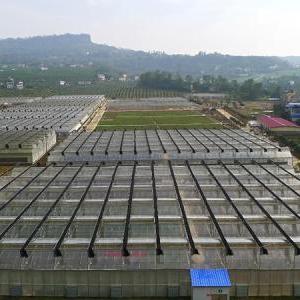
Why Greenhouse Sheds in China Must Prioritize Fire Protection Design? Professional Insights from Years of Industry Experience
Having been deeply engaged in the greenhouse shed design and construction industry for many years, we often get asked the same question by clients: "Greenhouses are originally used for growing crops, surrounded by soil and green plants—do they really need specialized fire protection design?" The answer is a resounding yes—fire protection design for greenhouse sheds is not only essential but also the core guarantee for safeguarding production safety and avoiding huge economic losses.
Especially in large-scale, highly intensive modern greenhouses, the consequences of a fire can be devastating: it will not only burn down the main structure of the greenhouse and various planting equipment but also cause large-scale crop failure, and in severe cases, even trigger chain safety accidents. Based on years of industry practice, this article systematically breaks down the key points of greenhouse shed fire protection from three dimensions: fire risk points, the necessity of fire protection, and solutions.
I. Hidden Fire Risks in Greenhouse Sheds Are Far More Prominent Than Imagined
Many people have a misconception that greenhouse sheds, "dominated by soil and green plants," have extremely low fire risks. However, in reality, the facility attributes and production scenarios of greenhouses themselves hide many easily overlooked fire hazards:
-
High Flammability of Building Materials, Easy Fire Out-of-Control
Most of the mainstream covering materials (such as plastic films, PC panels) and thermal insulation materials (such as rock wool felt, polystyrene boards) for current greenhouse sheds are polymer products. Among them, materials like ordinary polystyrene boards not only burn fast but also release a large amount of toxic gas during combustion. Once ignited, the fire will spread rapidly in a short time and be difficult to control quickly.
-
Dense Electrical Equipment, High Risk of Short-Circuit Fire
Temperature control systems, supplementary lighting equipment, ventilation fans, irrigation water pumps, etc., in greenhouse sheds all rely on electric power, with dense distribution of electrical circuits and equipment. If the circuit laying is irregular (such as exposed wires, unauthorized wiring), the equipment ages after long-term use, or the humid environment causes circuit leakage, it is very easy to cause short-circuit fires, which is also the main cause of greenhouse fires.
-
Improper Manual Operation, Hidden Hazards Everywhere
In winter, to ensure the temperature inside the shed, some growers will use coal-fired stoves, electric heaters, and other heating equipment. If the equipment is too close to flammable materials such as shed films and thermal insulation cotton, or left unattended for a long time, it is easy to ignite surrounding items; in addition, unauthorized storage of flammable and explosive items such as welding maintenance during farming operations and pesticides and fertilizers will also lay serious fire hazards.
-
Closed Environment Aggravates Fire, Difficult to Extinguish
To ensure thermal insulation, greenhouse sheds are usually in a relatively closed state with poor air circulation. Once a fire breaks out, smoke and fire will spread rapidly inside the shed, which not only shortens the "golden time" for fire control but also hinders personnel evacuation, greatly increasing the difficulty of fire fighting.
II. Fire Protection Design Is Not an "Extra Expense" but an Indispensable "Safety Investment"
For greenhouse sheds, fire protection design is by no means a dispensable additional item but a key link throughout the entire cycle of design, construction, and operation. Its necessity is mainly reflected in three aspects:
-
Protect Property Safety and Reduce Devastating Losses
The construction cost of a modern greenhouse shed is often hundreds of thousands to millions of yuan, plus the high-value crops and precision planting equipment inside the shed, the overall asset scale is huge. Sound fire protection design can reduce the probability of fire from the source, and even if a fire occurs, it can effectively control the scope of fire spread and minimize economic losses.
-
Ensure Personnel Safety and Avoid Accident Expansion
A large number of personnel carry out daily farming operations such as inspection, seedling raising, and picking in greenhouse sheds. Without reasonable fire separation, unobstructed evacuation channels, and complete fire-fighting facilities, it is easy to cause personnel to be trapped or injured in the event of a fire, leading to larger-scale safety accidents.
-
Comply with Industry Standards and Avoid Legal Compliance Risks
According to national and industry standards such as the Code for Fire Protection Design of Buildings and Technical Code for Greenhouse Engineering, large-scale greenhouse sheds and facility agricultural parks must be equipped with corresponding fire protection facilities and formulate comprehensive fire emergency plans. If the fire protection design fails to meet the standards, it will not only face the problem of failing compliance review and being unable to put into production but also may bear corresponding legal liabilities due to potential safety hazards.